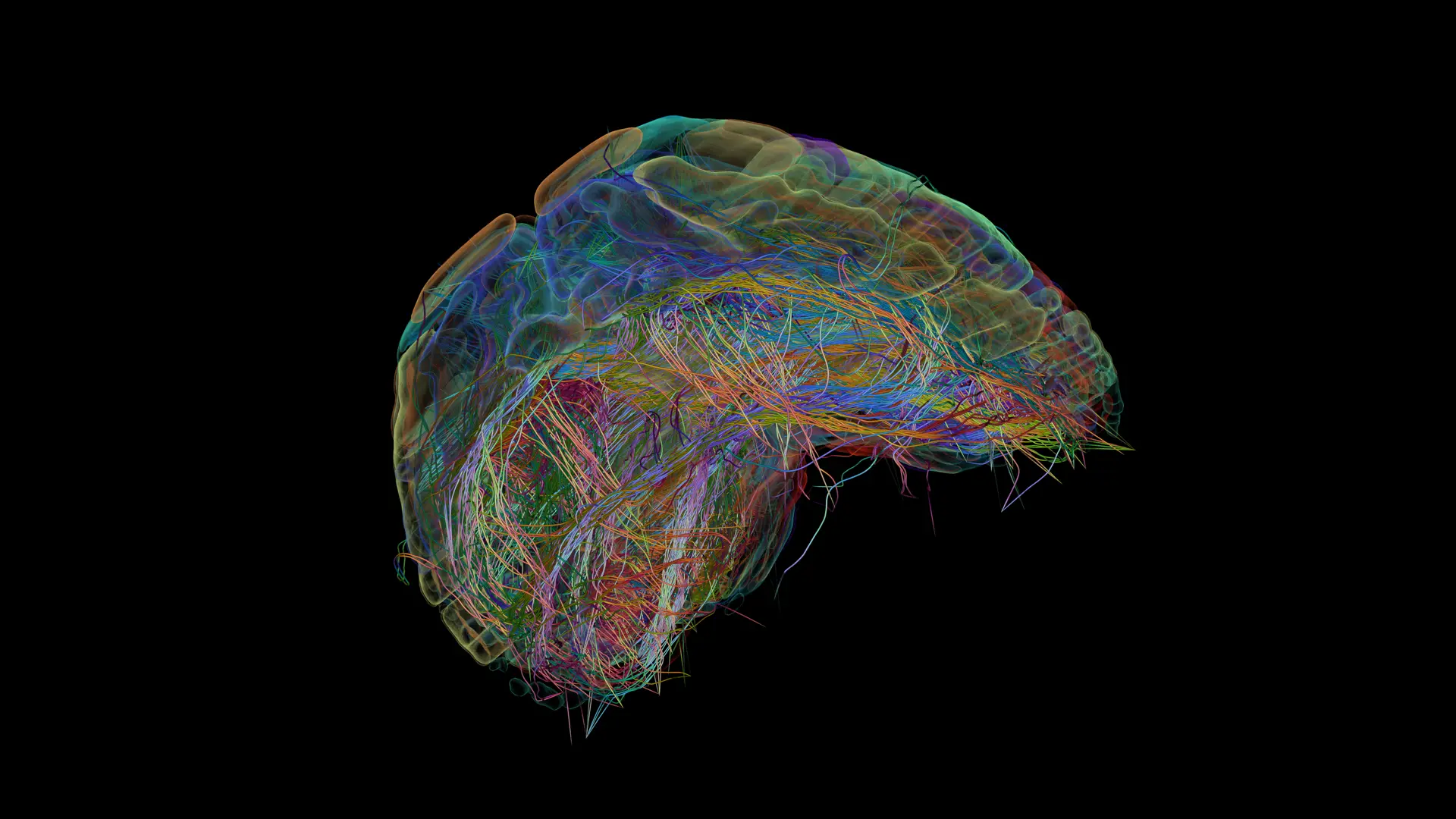
DLD Munich : #4 From Brain Simulation to Causal AI, The Open Brain & INAIT Revolution

Last week I attended the DLD conference in Munich, See program and ressources here DLD Munich 26
I was genuinely amazed and fascinated by the expertise of the speakers at DLD Munich this year—not just by the quality of their presentations, but by the depth of the discussions they sparked.
I couldn’t help but share these four summaries of the pivotal topics discussed:
EU Private and Public Policy Challenges regarding the Tech Future by Ann Mettler
Recursive Self-Improvement by Richard Socher
Normative Conflicts and Shallow AI Alignment by Raphaël Millière
From Brain Simulation to Causal AI: The Open Brain & INAIT Revolution by Henry Markman
#4 From Brain Simulation to Causal AI: The Open Brain & INAIT Revolution
by Henry Markman
How 20 years of fundamental research are opening up to the world to give birth to truly biological artificial intelligence.
One of the greatest challenges of the 21st century is no longer just building powerful machines, but understanding the most complex machine in the known universe: the human brain. Long the preserve of laboratories with colossal budgets, this quest is now undergoing a paradigm shift thanks to the Open Brain Institute (OBI) and the ambitions of the company INAIT.
The Open Brain Institute: Democratizing the “Source Code” of Life
The OBI does more than just model the brain; it makes it accessible. By transforming two decades of complex research (notably from the Blue Brain Project) into an open platform, the institute acts as a catalyst for global neuro-informatics.
To understand how a brain functions, the OBI proposes reconstructing it numerically according to a rigorous methodology, replicated a brain with its capabilities:
Populating the Volume: Filling the cerebral space with neurons (70 million for a mouse brain).
Growing Dendrites: Generating the branches that act as antennas to receive information.
Growing Axons: Simulating tens of thousands of kilometers of biological “wiring.”
Establishing Connections (Synapses): Applying specific rules to create a massive knowledge graph.
Activating the Model: “Turning on” the brain using models that recreate the electrical behavior of every single neuron.
The OBI has achieved an engineering feat: simplifying a massive ecosystem of 18 million lines of code to make it usable by any researcher or student.
Total Accessibility: Through virtual laboratories, a student in Africa can explore brain anatomy and conduct cutting-edge experiments without the need for expensive supercomputers.
Massive Sharing: Two petabytes of data, models, and software are made available to foster global collaborative research.
This project is now closed but all resources here Open Brain Platform, Launch your virtual lab and perform neuroscience at the speed of thought
Now moving to INAIT: Toward General (AGI) and Causal Artificial Intelligence
While the OBI provides the structural foundation, the company INAIT uses it as a springboard to revolutionize artificial intelligence. Its objective is clear: move beyond statistical AI (based on correlation) and enter the era of Causal AI.
“Fusion AI”: The Marriage of Biology and Silicon
INAIT is developing Adaptive Machines (iAM). This hybrid system combines:
Digital brains (for advanced cognition).
Large Language Models (LLMs) for communication.
Convolutional Neural Networks (CNNs) for sensory perception.
The value of causal learning lies in its ability to overcome the limitations of the correlation-based learning used by conventional AI. According to the sources, this approach revolutionizes efficiency, the understanding of the physical world, and the path toward Artificial General Intelligence (AGI).
Extreme Structural and Energy Efficiency: While classical AI (based on correlation) requires massive “Deep Reinforcement Learning” models with 100,000 to 100 million neurons to solve simple physics tasks, the biological approach requires only one or two neurons. This allows for a drastic reduction in energy consumption, potentially by a factor of one million.
Understanding the Laws of Physics (Physics AI): Correlation learning merely maps data to recreate images or text without understanding the underlying reality. Conversely, causal learning allows a digital brain to interact with the world, anticipate trajectories, and understand the laws of physics in real-time, much like a bird catching an insect in mid-flight.
Cumulative Learning and Progressive Ease: In current AI, learning a new skill after another can become increasingly difficult because the system must readjust all its coefficients. Sources indicate that true causal learning follows the child development model: once the foundations are acquired (like simple math), advanced concepts (like calculus or topology) become progressively easier to learn.
The Foundation of Reasoning and Decision-Making: Causal learning is presented as a crucial step toward achieving reasoning, decision-making, and eventually, emotions. Rather than simply “throwing data” at a model for it to find correlations, this method teaches digital brains to acquire cognitive skills in a structured manner.
Adaptability and Interaction: Thanks to a unique causal learning rule, machines can learn through experience and direct interaction with their environment (whether real, virtual, or digital). This allows them to adapt intelligently instead of simply repeating statistical patterns.
In summary, the sources present causal learning as the transition from an AI that “mimics” data patterns (correlation) to an AI that “understands” cause and effect (causality)—a shift that is indispensable for creating autonomous systems capable of evolving in the physical world.
Conclusion: An AI That No Longer Just “Mimics”. By decoding the “Neural Code,” we are not just creating more efficient machines; we are paving the way for an AI capable of perceiving, adapting, and reasoning like a biological organism and finally interacting with the physical world autonomously and sustainably.
See this brief presentation at last WEF (2024) What are Digital Brains