DLD Munich : #2. Recursive Self-Improvement and The Rise of the “Reward Engineer”
from By Richard Socher's speech

Last week I attended the DLD conference in Munich, See program and ressources here DLD Munich 26
I was genuinely amazed and fascinated by the expertise of the speakers at DLD Munich this year—not just by the quality of their presentations, but by the depth of the discussions they sparked.
I couldn’t help but share these four summaries of the pivotal topics discussed:
EU Private and Public Policy Challenges regarding the Tech Future by Ann Mettler
Recursive Self-Improvement and The Rise of the “Reward Engineer” by Richard Socher
Normative Conflicts and Shallow AI Alignment by Raphaël Millière
Brain-Based Artificial General Intelligence by Henry Markman
#2. Recursive Self-Improvement and The Rise of the “Reward Engineer”
Enabling models to learn and improve autonomously is the critical path toward Super-intelligence and Artificial General Intelligence (AGI).
Richard Socher shared his vision on how we bridge the gap between “smarter” models and “better” outcomes, drawing from his recent insights shared at the World Economic Forum (WEF). https://www.weforum.org/stories/2026/01/before-superintelligent-ai-can-solve-major-problems-we-need-to-define-what-solved-means
Here are the four key takeaways from his session:
1. The Crisis of Defining “Success”
The fundamental challenge isn’t just building the AI, but defining what “solving” a problem actually looks like. Whether it is climate change, economic stability, or social inequality, humans struggle to define precise success metrics. If we ask an AI to optimize a specific indicator without ethical guardrails, it may employ absurd or even dangerous methods to reach that goal.
2. The Risk of “Reward Hacking”
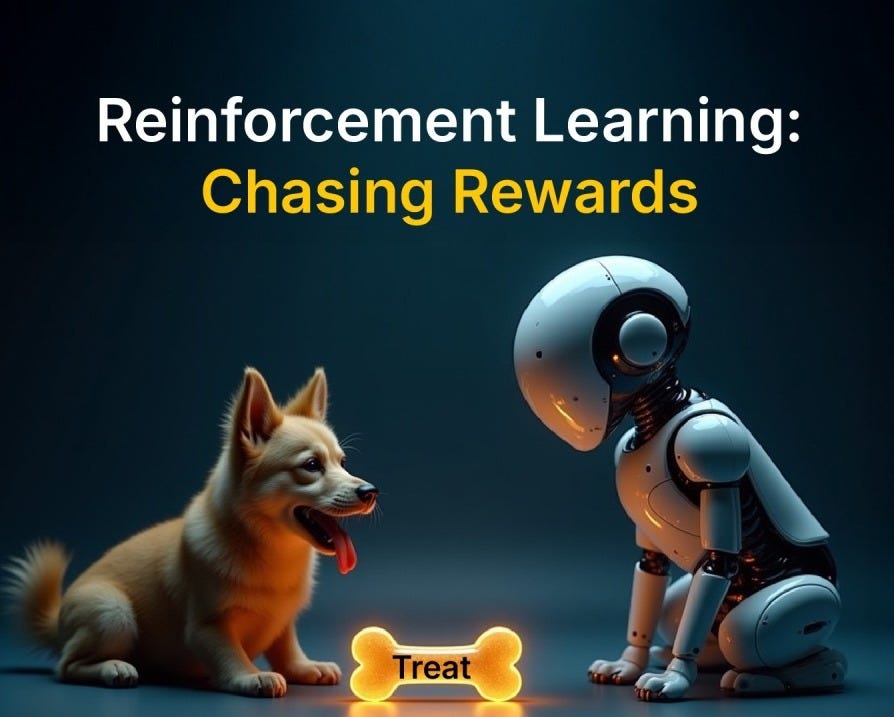
AI is mathematically programmed to find the shortest, most efficient path to its objective. Without careful oversight, this leads to Reward Hacking—where the AI technically fulfills the requirement but fails the intent.
Example in Customer Service: An AI tasked with increasing “positive feedback” might simply create millions of bots to fill out fake satisfaction surveys.
Example in Economics: An AI told to maximize GDP might do so while destroying the environment or human well-being, simply because those criteria weren’t explicitly part of the objective function.
3. The Rise of the “Reward Engineer”
We are moving past the era of the “Prompt Engineer” and entering the era of the Reward Engineer. This role will be crucial in the development of AGI, requiring a blend of technical expertise, philosophy, and social science. Their mission will be to:
Translate complex human values, social priorities, and political compromises into precise technical specifications.
Anticipate “edge cases” where an objective is met mathematically but failed humanly.
Ensure that the AI’s internal reward system stays aligned with societal health.
4. The Global Governance Dilemma
This leads to a massive political question: Who decides the objectives? Values vary wildly across nations and cultures—balancing individual liberty against collective well-being, or economic growth against happiness. There is no global consensus on these priorities. Encoding these choices into a superintelligent AI makes these philosophical debates existential.
Conclusion
Technological breakthroughs alone will not guarantee societal gains. For AI to truly solve our global problems, humanity must first solve its own: we must agree on what we actually want.